

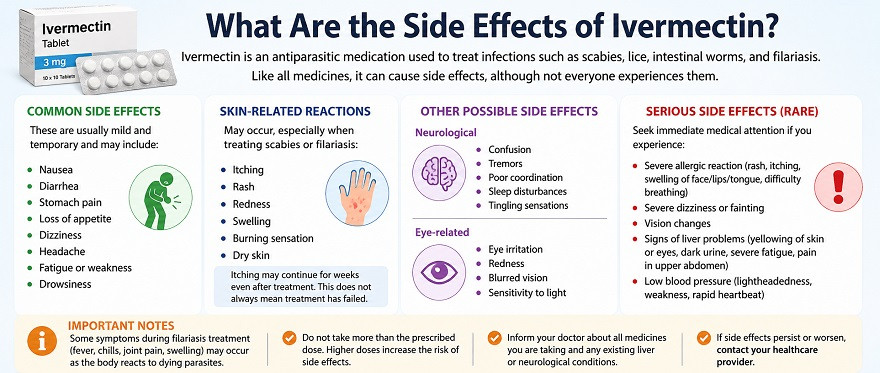
Ivermectin is a prescription antiparasitic medication used to treat a variety of parasitic infections in humans. It is commonly prescribed for conditions such as scabies, head lice, intestinal worm infections, and filariasis, a disease caused by parasitic worms transmitted through mosquito bites. While ivermectin is generally considered safe and effective when used as directed, it can cause side effects ranging from mild discomfort to rare but serious reactions.
Understanding the potential side effects of ivermectin, especially when used to treat filariasis, can help patients recognize normal treatment responses and know when to seek medical attention.
Common Side Effects of Ivermectin
Most people who take ivermectin experience either no side effects or only mild symptoms. Common side effects are usually temporary and often resolve on their own as the body adjusts to the medication.
Some of the most frequently reported side effects include:
- Nausea
- Diarrhea
- Stomach pain
- Loss of appetite
- Dizziness
- Headache
- Fatigue or weakness
- Drowsiness
These symptoms are generally mild and may not require medical treatment. Drinking plenty of water and taking the medication exactly as directed can help reduce discomfort.
Skin-Related Reactions
When ivermectin is used to treat parasitic skin infections such as scabies, some people may notice skin-related reactions. These effects can occur because the medication is killing the parasites and triggering an immune response.
Possible skin reactions include:
- Itching
- Rash
- Redness
- Swelling
- Burning sensation
- Dry skin
In many cases, itching may continue for several weeks after treatment even though the parasites have been eliminated. This does not necessarily mean the treatment has failed.
Neurological Side Effects
Although uncommon, ivermectin can affect the nervous system in some individuals. Neurological side effects are more likely to occur if the medication is taken in excessive amounts or if a person has certain underlying health conditions.
Potential neurological symptoms include:
- Confusion
- Difficulty concentrating
- Tremors
- Coordination problems
- Sleep disturbances
- Tingling sensations
Patients who experience severe dizziness, loss of balance, or unusual mental changes should seek medical advice promptly.
Eye-Related Side Effects
Some individuals may experience temporary eye-related symptoms while taking ivermectin, particularly when it is used to treat infections involving parasites that affect the eyes.
Possible eye side effects include:
- Eye irritation
- Redness
- Swelling around the eyes
- Blurred vision
- Sensitivity to light
Most eye symptoms are mild and improve without treatment. However, persistent vision changes should be evaluated by a healthcare professional.
Serious Side Effects
Serious side effects from ivermectin are rare but can occur. Immediate medical attention may be necessary if any severe symptoms develop.
Serious reactions may include:
Severe Allergic Reactions
A severe allergic reaction can be life-threatening and may involve:
- Difficulty breathing
- Swelling of the face, lips, tongue, or throat
- Severe skin rash
- Intense itching
- Rapid heartbeat
Anyone experiencing signs of an allergic reaction should seek emergency medical care immediately.
Liver Problems
In rare cases, ivermectin may affect liver function. Symptoms of potential liver issues include:
- Yellowing of the skin or eyes (jaundice)
- Dark urine
- Persistent nausea
- Severe fatigue
- Upper abdominal pain
People with pre-existing liver disease should inform their healthcare provider before taking ivermectin.
Low Blood Pressure
Some individuals may experience a sudden drop in blood pressure, leading to:
- Lightheadedness
- Fainting
- Weakness
- Rapid heartbeat
Standing up slowly after sitting or lying down may help reduce the risk of dizziness.
Side Effects Caused by Parasite Die-Off
Interestingly, some symptoms associated with ivermectin are not directly caused by the medication itself but by the body's reaction to dying parasites. As parasites are destroyed, the immune system may respond with temporary inflammatory symptoms.
These reactions can include:
- Fever
- Muscle pain
- Joint pain
- Swollen lymph nodes
- Increased itching
- General discomfort
Such effects are often temporary and may indicate that the treatment is working.
Risk Factors for Side Effects
Certain individuals may be more likely to experience side effects from ivermectin. Risk factors include:
- Taking higher-than-prescribed doses
- Existing liver disease
- Advanced age
- Weakened immune system
- Use of medications that interact with ivermectin
Patients should always provide their healthcare provider with a complete list of medications and supplements they are taking.
Drug Interactions
Ivermectin may interact with certain medications, potentially increasing the risk of side effects. Examples include:
- Blood thinners
- Sedatives
- Anti-seizure medications
- Certain antibiotics
Drug interactions can alter how ivermectin works or increase the likelihood of adverse reactions. Medical guidance is essential when combining medications.
When to Contact a Healthcare Provider
Most mild side effects do not require emergency care. However, medical attention should be sought if symptoms become severe, persistent, or unusual.
Contact a healthcare provider if you experience:
- Severe dizziness
- Difficulty breathing
- Vision changes
- Signs of liver problems
- Severe skin reactions
- Persistent vomiting or diarrhea
Prompt evaluation can help prevent complications and ensure safe treatment.
Conclusion
Ivermectin is an effective medication for treating various parasitic infections and is generally well tolerated when used appropriately. Common side effects such as nausea, headache, dizziness, and mild skin reactions are usually temporary and manageable. Serious complications are rare but can include allergic reactions, liver problems, and neurological symptoms. Understanding the potential side effects of ivermectin allows patients to use the medication safely and recognize when professional medical advice may be needed. Always follow your healthcare provider's instructions and never exceed the prescribed dosage to minimize risks and maximize treatment effectiveness.



Validate your login