

When most people think about testosterone, they associate it with masculinity, strength, and a healthy sex life. It's often believed that the higher your testosterone levels are, the better your sexual performance will be. But is that really true?
Surprisingly, the answer isn't as simple as "more testosterone equals better erections." While testosterone is essential for maintaining libido and supporting erectile function, having excessively high testosterone levels doesn't always improve sexual performance. In some situations, it may actually contribute to erectile dysfunction (ED), especially when elevated testosterone results from anabolic steroid use, hormone misuse, or certain medical conditions.
Erectile dysfunction affects millions of men worldwide and is often linked to poor blood circulation, diabetes, stress, obesity, or hormonal imbalances. Although low testosterone is a well-known contributor to reduced sexual desire, researchers have found that too much testosterone can also interfere with the body's natural hormonal balance, indirectly affecting erectile health.
In this article, we'll explore whether high testosterone can cause erectile dysfunction, how hormones influence erections, the warning signs of hormonal imbalance, and what treatment options are available if you're experiencing ED.
Understanding the Role of Testosterone
Testosterone is the primary male sex hormone produced mainly in the testicles. Its levels begin to rise during puberty and continue to play an essential role throughout adulthood. In addition to influencing physical characteristics such as muscle growth, body hair, and a deeper voice, testosterone supports several aspects of sexual health. Healthy testosterone levels help maintain sexual desire, which is why many people believe testosterone makes you horny, but sexual arousal and performance depend on many other physical and psychological factors as well.
Healthy testosterone levels help maintain sexual desire, support sperm production, preserve muscle mass, improve bone strength, and contribute to overall energy and mood. However, it's important to understand that testosterone alone does not create an erection.
An erection is the result of several body systems working together. The brain must respond to sexual stimulation, nerves need to transmit signals properly, blood vessels must allow increased blood flow into the penis, and hormones must remain balanced. If any part of this process is disrupted, erectile dysfunction can occur—even when testosterone levels are normal or high.
Can High Testosterone Cause Erectile Dysfunction?
For most healthy men, naturally high testosterone levels do not directly cause erectile dysfunction. In fact, men with testosterone levels in the upper end of the normal range often have a healthy libido and normal erectile function.
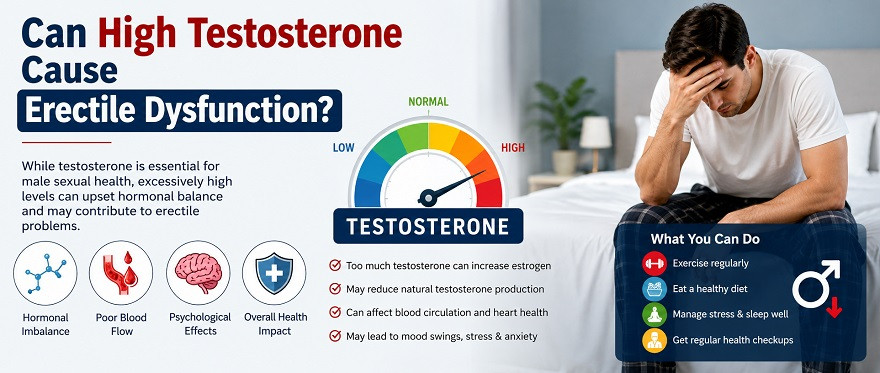
However, problems may develop when testosterone levels become abnormally high, particularly due to testosterone replacement therapy without proper monitoring or the misuse of anabolic steroids. Excess testosterone can disturb the body's hormonal feedback system, causing several changes that may negatively affect sexual performance.
One of the most common problems is that external testosterone suppresses the body's own hormone production. When the brain detects excessive testosterone in the bloodstream, it signals the testicles to reduce their natural production. Over time, this may lead to hormonal imbalance, reduced fertility, testicular shrinkage, and even erectile difficulties after stopping testosterone use.
Another issue involves estrogen. Although testosterone is considered a male hormone, some of it naturally converts into estrogen through a process known as aromatization. When testosterone levels become excessively high, estrogen levels may also increase. Elevated estrogen can reduce libido, interfere with erections, and cause symptoms such as breast enlargement and water retention.
Additionally, long-term steroid abuse has been associated with cardiovascular problems, increased blood pressure, thicker blood, and reduced blood vessel function. Since erections rely on healthy blood circulation, these changes may contribute to erectile dysfunction over time.
Hormonal imbalance can also affect mental health. Men with excessively high testosterone from steroid use sometimes experience mood swings, anxiety, aggression, irritability, or depression after discontinuing steroids. Psychological stress alone is a significant risk factor for erectile dysfunction.
Why Hormonal Balance Matters More Than High Testosterone
One of the biggest misconceptions about male sexual health is that testosterone alone determines a man's ability to achieve and maintain an erection. In reality, sexual function depends on a delicate balance of several hormones working together. Even if testosterone levels are higher than normal, an imbalance in other hormones can interfere with normal erectile function.
For example, testosterone interacts closely with hormones such as luteinizing hormone (LH), follicle-stimulating hormone (FSH), estrogen, and prolactin. When testosterone becomes excessively elevated—especially due to anabolic steroid use or unsupervised testosterone therapy—this balance can be disrupted. The brain responds by reducing the production of LH and FSH, hormones that stimulate the testicles to produce testosterone and sperm naturally. Over time, this suppression may affect fertility, reduce testicular function, and contribute to sexual performance issues.
It's also important to remember that erectile dysfunction is often multifactorial. A man with high testosterone may still develop ED because of diabetes, obesity, smoking, heart disease, chronic stress, anxiety, or side effects from certain medications. This is why doctors rarely rely on a testosterone test alone when evaluating erectile dysfunction. Instead, they consider a person's medical history, lifestyle, cardiovascular health, psychological well-being, and overall hormone profile before determining the underlying cause.
Maintaining testosterone within a healthy physiological range is far more beneficial than simply aiming for the highest possible level. Balanced hormones, healthy blood circulation, regular exercise, quality sleep, and proper medical care all play a much greater role in supporting long-term erectile health than testosterone levels alone.
Symptoms of Excessively High Testosterone
Although naturally high testosterone is relatively uncommon, excessively elevated levels caused by hormone therapy or anabolic steroid use may produce noticeable symptoms. These symptoms can vary from person to person but often include severe acne, oily skin, increased body hair growth, mood changes, unexplained aggression, headaches, elevated blood pressure, sleep disturbances, and fluid retention.
Some men may also notice shrinking testicles, reduced sperm count, or fertility problems. In certain cases, breast tissue enlargement, known as gynecomastia, may develop due to increased estrogen levels. If these symptoms occur alongside erectile dysfunction, consulting a healthcare professional is important to identify the root cause and prevent long-term complications.
Other Common Causes of Erectile Dysfunction
While hormonal factors can contribute to ED, many cases are caused by other underlying health conditions. Poor blood circulation remains one of the leading causes of erectile dysfunction. Conditions such as diabetes, high blood pressure erectile dysfunction, high cholesterol, and cardiovascular disease can damage blood vessels and restrict blood flow to the penis.
Lifestyle habits play a major role in erectile function. Smoking, excessive alcohol consumption, physical inactivity, and obesity can all increase the risk of erectile dysfunction. In addition, mental health issues such as anxiety, depression, relationship stress, and sexual performance anxiety can significantly affect sexual function by interfering with arousal, confidence, and the ability to achieve or maintain an erection.
Because erectile dysfunction often results from multiple contributing factors, a comprehensive medical evaluation is often the best way to determine the underlying cause and choose the most effective treatment approach.
How to Maintain Healthy Testosterone Levels
Maintaining healthy testosterone levels doesn't require extreme measures. In most cases, simple lifestyle habits can support natural hormone production and overall sexual health.
Regular exercise, particularly strength training and resistance workouts, can help promote healthy testosterone levels. Eating a balanced diet rich in lean proteins, healthy fats, fruits, vegetables, and whole grains also supports hormone production. Getting seven to nine hours of quality sleep each night is equally important because testosterone production occurs primarily during sleep.
Managing stress through relaxation techniques, maintaining a healthy body weight, limiting alcohol intake, and avoiding anabolic steroid use can further support hormonal balance and reduce the risk of erectile dysfunction.
Conclusion
High testosterone does not usually cause erectile dysfunction on its own. In fact, healthy testosterone levels are essential for maintaining libido and supporting normal sexual function. However, excessively high testosterone levels—especially those caused by anabolic steroids or improperly managed testosterone therapy—can disrupt hormonal balance, increase estrogen levels, affect cardiovascular health, and contribute to erectile difficulties.
Rather than focusing solely on testosterone numbers, men should prioritize overall hormonal balance, cardiovascular health, mental well-being, and healthy lifestyle habits. If erectile dysfunction becomes a persistent problem, seeking professional medical advice is the best way to identify the underlying cause and receive appropriate treatment.
A balanced approach to health will always provide better long-term results than simply chasing higher testosterone levels.






Validate your login