

If you're taking sildenafil for erectile dysfunction (ED), you've probably focused on finding the right dose and learning how long it lasts. However, there's another important factor that deserves just as much attention—drug interactions. Certain medications, foods, and even alcohol can affect how sildenafil works in your body. Some interactions simply increase the chance of common side effects, while others can become serious medical emergencies.
Understanding sildenafil interactions doesn't mean you should avoid treatment. Instead, it helps you use the medication more safely and confidently. Here's what you need to know before taking sildenafil.
The Most Serious Interaction: Nitrate Medications
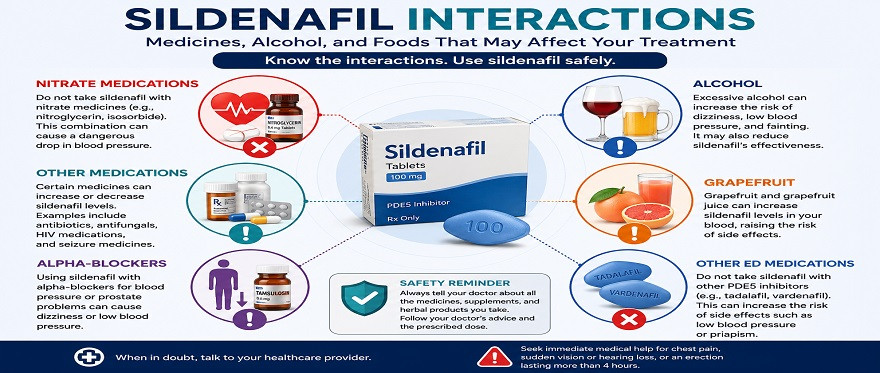
The most dangerous sildenafil interaction involves nitrate medications, which are commonly prescribed for chest pain (angina) and some heart conditions. Examples include nitroglycerin, isosorbide mononitrate, and isosorbide dinitrate.
Both nitrates and sildenafil relax blood vessels. When taken together, they can cause blood pressure to fall suddenly to dangerously low levels. This may result in fainting, heart attack, stroke, or other life-threatening complications. If you take nitrate medications, sildenafil should not be used unless your healthcare provider specifically advises otherwise.
Blood Pressure Medicines and Alpha-Blockers
Many men with erectile dysfunction also have high blood pressure or an enlarged prostate, meaning they may already be taking medications for these conditions.
Although sildenafil generic can often be used safely alongside blood pressure medications, it may enhance their blood pressure-lowering effects. This can lead to dizziness, lightheadedness, or fainting in some people.
The same caution applies to alpha-blockers such as tamsulosin, doxazosin, and terazosin. Healthcare providers often recommend starting with the lowest effective sildenafil dose and monitoring for symptoms of low blood pressure when these medicines are used together.
Medicines That Can Change Sildenafil Levels
Your liver breaks down generic sildenafil using an enzyme called CYP3A4. Some medications slow this process, causing sildenafil to remain in your body longer than expected.
Certain antibiotics, antifungal medications, and HIV treatments can increase sildenafil generic levels, making side effects such as headache, flushing, nasal congestion, and dizziness more common. In these situations, your healthcare provider may recommend a lower sildenafil dose.
On the other hand, medicines used to treat conditions such as epilepsy or tuberculosis may speed up sildenafil breakdown, making it less effective. If sildenafil doesn't seem to work as expected, another medication you're taking could be the reason.
Can You Drink Alcohol While Taking Sildenafil?
Many people wonder whether alcohol is safe with sildenafil. Having a small amount of alcohol is unlikely to cause serious problems for most healthy adults. However, drinking large amounts may increase the risk of dizziness, low blood pressure, headaches, and fainting.
Heavy alcohol consumption can also make erectile dysfunction worse, reducing the benefits of sildenafil. Limiting alcohol intake before taking the medication is generally the safest approach.
Grapefruit and Herbal Supplements
Grapefruit and grapefruit juice may affect the enzymes responsible for breaking down sildenafil. This can increase the amount of medication in your bloodstream and raise the likelihood of side effects. If you regularly consume grapefruit products, ask your healthcare provider whether you should avoid them during sildenafil treatment.
Herbal supplements promoted for male sexual health may also interact with sildenafil. Because these products vary widely in quality and ingredients, combining them with prescription medication is not always safe. Always inform your healthcare provider about any supplements you are taking.
Avoid Combining Sildenafil with Other ED Medications
Taking sildenafil together with other PDE5 inhibitors
Generally not recommended. Using multiple erectile dysfunction medications at the same time increases the risk of side effects, including severe low blood pressure and priapism, without improving treatment outcomes.
When Should You Seek Medical Help?
Most side effects associated with sildenafil are mild and temporary. However, you should seek immediate medical attention if you experience chest pain, sudden loss of vision or hearing, severe dizziness, difficulty breathing, or an erection lasting longer than four hours. Prompt treatment is essential to prevent serious complications.
Sildenafil is a well-established treatment for erectile dysfunction, but using it safely requires more than taking the correct dose. Understanding how other medications, alcohol, grapefruit, and herbal supplements may interact with sildenafil can help reduce unnecessary risks and improve treatment success.
Before starting sildenafil, discuss your complete medical history and current medications with your healthcare provider. Following professional advice and avoiding known interactions will help you use sildenafil safely while getting the greatest benefit from your treatment.




Validate your login