

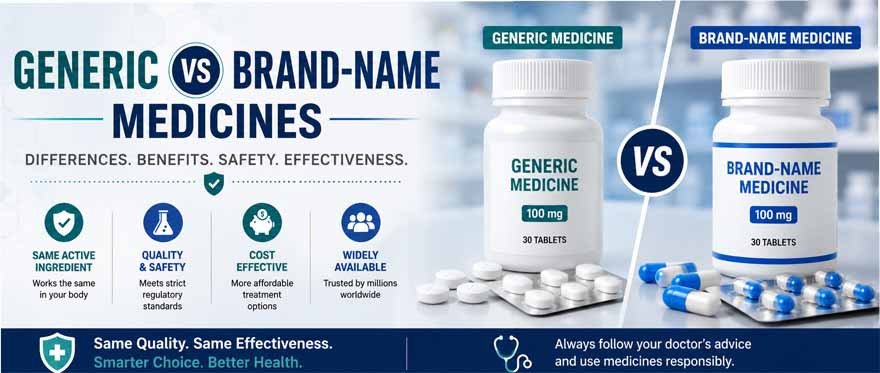
When a doctor prescribes a medicine, patients may have a choice between a brand-name product and a generic version. This often leads to questions about their differences, effectiveness, safety, and cost. Although generic and brand-name medicines may have different names, packaging, colors, or shapes, an approved generic medicine contains the same active ingredient as its corresponding brand-name medicine.
Understanding how these medicines compare can help patients make informed decisions and use medications more safely.
What Is a Generic Medicine?
A generic medicine is a medication that contains the same active ingredient as an approved brand-name medicine. It is generally intended to provide the same therapeutic effect when used at the appropriate strength, dosage, and route of administration.
Generic drugs may differ in appearance from their brand-name counterparts. Manufacturers can use different colors, shapes, inactive ingredients, and packaging. These differences do not necessarily affect the medicine's intended therapeutic action.
Before an approved generic medicine reaches the market, it must meet applicable regulatory requirements for quality, safety, and performance.
What Is a Brand-Name Medicine?
A brand-name medicine is usually introduced and marketed under a specific name by the company that originally developed or commercialized the drug. Developing a new medicine involves extensive research, laboratory testing, clinical studies, manufacturing development, and regulatory review.
Patent and exclusivity protections may provide the original manufacturer with a period of market protection. After applicable protections expire, other manufacturers may develop equivalent generic versions.
This helps increase competition and can provide patients with more affordable treatment options.
Generic vs Brand-Name Medicines: What Is the Difference?
The most noticeable difference is often price. Generic medicines are commonly less expensive because generic manufacturers do not usually need to repeat the entire original drug-development process.
Other differences may include:
- Manufacturer and brand name
- Packaging and labeling
- Tablet or capsule appearance
- Certain inactive ingredients
- Retail price
However, approved generic medicines are expected to meet established requirements for quality, strength, and performance. The active ingredient is responsible for producing the intended therapeutic effect.
Are Generic Medicines as Effective as Brand-Name Medicines?
A common concern is whether generic medicines work as well as their brand-name counterparts. Approved generic medicines are developed to meet regulatory standards demonstrating that they perform appropriately and provide the expected therapeutic effect.
For many medicines, the generic version delivers the same active ingredient to the body in a comparable manner. Therefore, when appropriately approved and correctly used, generic medicines can provide effective treatment comparable to the corresponding brand-name medicine.
However, individual responses to medication can vary. Patients should not change their prescribed treatment or dosage without consulting a qualified healthcare professional.
Benefits of Generic Medicines
One of the main generic medicine benefits is affordability. Lower prices can make important treatments more accessible, particularly for people who require medication for extended periods.
Other potential benefits include:
- Lower medication expenses
- Greater availability of established treatments
- More choices among manufacturers
- Improved access to commonly prescribed medicines
- Potential reduction in overall healthcare costs
For people taking long-term medication, choosing an appropriate generic alternative may significantly reduce treatment expenses.
Generic Medicine Safety
Generic medicine safety is determined through regulatory standards and quality-control requirements. Approved medicines must satisfy applicable requirements related to manufacturing, strength, stability, quality, and performance.
However, patients should obtain medicines from reputable pharmacies and follow the directions provided by their healthcare professional or official product information.
The term “generic” does not automatically mean that a medicine is unsafe or inferior. At the same time, consumers should be cautious when purchasing medicines from unknown online sources where the product's authenticity, storage conditions, manufacturing information, or regulatory status cannot be confirmed.
Generic Medicines and Different Health Conditions
Generic medicines are available for many health conditions, depending on the medicine and the country in which it is approved. For example, healthcare professionals may prescribe generic medicines for infections, allergies, cardiovascular conditions, pain, or other medical problems.
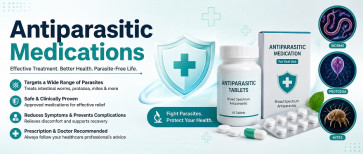
For conditions involving parasites, doctors may recommend specific antiparasitic medications for humans based on the type of infection, the patient's circumstances, and applicable treatment guidelines. Patients should never assume that a medicine intended for one purpose is appropriate for another.
This is particularly important when considering human vs. veterinary medicines. Veterinary products may have different formulations, concentrations, inactive ingredients, and regulatory requirements. Medicines intended for animals should not be substituted for human medicines unless specifically directed by an appropriate professional.
Prescription Medicines and Their Uses
Not every medicine is suitable for everyone. A healthcare professional considers factors such as the patient's condition, age, other medicines, allergies, and medical history when selecting treatment.
Understanding prescription medicines and their uses is therefore important before starting or changing therapy. Patients should follow the prescribed dose and duration rather than assuming that a higher dose will provide better results.
For certain infections, for example, treatment may depend on identifying the specific organism responsible for the illness. Using the wrong medicine may delay appropriate treatment or contribute to unnecessary risks.
Generic Medicine Side Effects
Generic medicines can cause side effects, just like brand-name medicines. Because the active ingredients are generally the same, they can produce similar expected effects and adverse reactions.
Some generic products may contain different inactive ingredients. This can occasionally matter for people who have particular allergies or sensitivities.
Anyone who develops concerning or severe symptoms after taking a medicine should seek appropriate medical attention. Learning about medicine side effects and safety can help patients recognize potential problems and understand when professional advice may be necessary.
Why Are Generic Medicines Cheaper?
Generic medicines are often less expensive because their manufacturers can enter the market after applicable patent or exclusivity protections end. They also generally do not have to repeat all of the original research and development required to establish a new active ingredient.
Competition between manufacturers can further reduce prices. Lower cost does not necessarily indicate lower quality when the product has been properly approved and manufactured according to applicable standards.
Final Thoughts
Generic and brand-name medicines can differ in appearance, manufacturer, packaging, inactive ingredients, and price, but an approved generic contains the same active ingredient as its corresponding brand-name medicine and is developed to meet applicable quality and performance requirements.
The affordability of generic medicines can make established treatments more accessible, while appropriate regulatory oversight helps support their quality and safety. Nevertheless, patients should obtain medicines from reliable sources and use them according to professional medical advice.
Whether choosing a generic or brand-name medicine, the most important considerations are the specific medication, its intended use, appropriate dosage, potential interactions, and the patient's individual medical needs.
For additional information about generic medicines: FDA Generic Drug Facts
For additional information about generic drug questions: FDA Generic Drugs Questions and Answers




Validate your login