

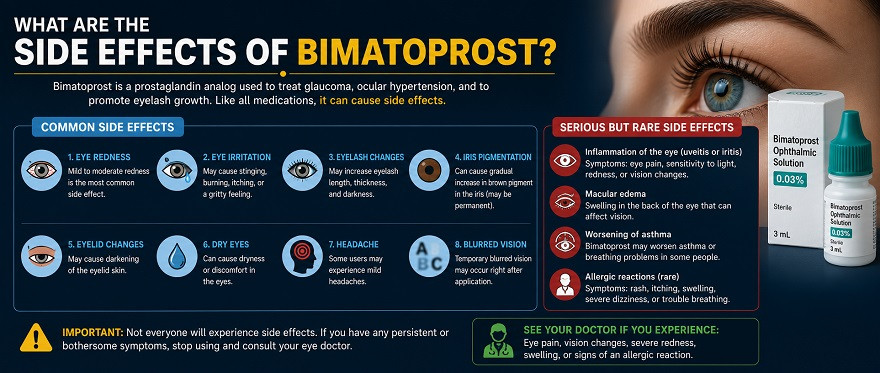
Bimatoprost has become a well-known medication in both ophthalmology and cosmetic care. Doctors commonly prescribe it to lower elevated eye pressure in patients with glaucoma or ocular hypertension, while a cosmetic formulation is used to enhance eyelash growth. Although the treatment is highly effective, many users are concerned about the side effects that may develop during long-term use. One of the most noticeable changes is eyelid darkening, a condition that can affect the appearance of the skin around the eyes.
Understanding why this happens, who may be at risk, and what other side effects can occur is important for anyone considering or currently using bimatoprost.
Understanding How Bimatoprost Works
Bimatoprost is classified as a prostaglandin analog. In glaucoma treatment, it helps lower pressure inside the eye by improving the natural drainage of fluid. Reducing intraocular pressure is essential because elevated pressure can damage the optic nerve and eventually lead to vision loss.
For cosmetic use, the medication works differently. It influences the growth cycle of eyelashes, allowing them to remain in the growth phase for a longer period. As a result, eyelashes often become longer, thicker, and darker over time.
While these effects are desirable for many users, the medication can also affect nearby tissues, leading to several cosmetic and medical side effects.
Why Does Eyelid Darkening Happen?
Eyelid darkening is one of the most frequently reported appearance-related side effectsof bimatoprost. This condition occurs when the medication stimulates pigment-producing cells in the skin. These cells, known as melanocytes, produce melanin, the substance responsible for skin color.
As melanin production increases, the skin surrounding the eyes may gradually develop a darker tone. The change is usually subtle at first but can become more noticeable after weeks or months of continuous use.
The risk is often higher when excess medication spreads beyond the lash line and repeatedly contacts the surrounding skin. Because the eyelid area is thin and sensitive, even small amounts of repeated exposure can contribute to pigmentation changes.
In many cases, the darkening becomes less noticeable after treatment is discontinued. However, the speed and extent of recovery differ from person to person.
Changes Beyond Skin Pigmentation
Although eyelid darkening receives significant attention, it is not the only visible effect associated with bimatoprost.
Many users experience dramatic eyelash enhancement. Lashes may appear fuller, longer, and more defined, which is the primary reason the product is used cosmetically. However, inconsistent application can sometimes produce uneven growth patterns.
Another possible change involves the color of the iris. Some individuals, particularly those with mixed eye colors, may notice gradual darkening of the iris over time. Unlike eyelid pigmentation, this change may not completely reverse after treatment stops.
Users may also experience temporary redness, mild burning sensations, itching, watering of the eyes, or a feeling that something is present in the eye. These symptoms are generally mild but should be monitored if they persist.
Long-Term Effects Around the Eyes
Researchers have identified a collection of changes known as prostaglandin-associated periorbital changes. These effects are linked to long-term use of medications in the prostaglandin analog family.
Some users develop a more hollow appearance around the eyes due to a reduction in fat tissue in the orbital region. This can create a deeper upper eyelid crease and alter facial symmetry. In certain cases, the eyes may appear more sunken than before treatment.
Additional changes can include mild eyelid drooping and tightening of tissues around the eye socket. These effects are not experienced by everyone, but they have become an important consideration for individuals using bimatoprost eye drops for extended periods.
Medical professionals continue to study why these structural changes occur, but current evidence suggests they may be related to the medication's influence on fat cells and surrounding tissues.
Potential Medical Risks
Most side effects of bimatoprost are cosmetic and manageable. However, some medical concerns require attention.
Individuals with a history of eye inflammation should use the medication carefully because it may worsen certain inflammatory conditions. Patients who have undergone eye surgery or have retinal disorders may also require additional monitoring while using the drug.
Rarely, swelling in the central portion of the retina can occur in susceptible individuals. Because the retina plays a critical role in vision, any changes affecting this structure should be evaluated promptly by an eye specialist.
People who wear contact lenses should also follow usage instructions carefully. Preservatives found in some formulations can interact with soft lenses, potentially causing irritation or reducing comfort.
Reducing the Likelihood of Side Effects
Careful application can significantly reduce unwanted effects. Users should apply only the prescribed amount and avoid allowing excess liquid to spread onto nearby skin.
Helpful practices include:
- Using a clean applicator for each application.
- Applying the medication precisely along the lash line.
- Removing excess product immediately.
- Washing hands after use.
- Following the dosing schedule exactly as directed.
These simple habits can lower the chance of pigmentation changes and other appearance-related concerns.
When Professional Advice Is Necessary
Anyone experiencing persistent discomfort, vision disturbances, severe redness, swelling, or unusual changes in eye appearance should seek medical evaluation. Regular follow-up appointments are particularly important for glaucoma patients because eye pressure must be monitored to ensure treatment effectiveness.
Early recognition of side effects allows healthcare providers to determine whether adjustments in treatment are necessary.
Final Thoughts
Bimatoprost offers valuable benefits for both eye health and cosmetic enhancement. Its ability to reduce eye pressure helps protect vision, while its eyelash-growth properties have made it popular worldwide. However, users should understand that treatment can sometimes lead to eyelid darkening, iris pigmentation, eye irritation, and structural changes around the eyes.
Being informed about these possibilities allows patients to make confident decisions and use the medication responsibly. Proper application techniques, routine monitoring, and ongoing communication with an eye care professional remain the most effective ways to achieve the benefits of bimatoprost while minimizing potential risks.







Validate your login